
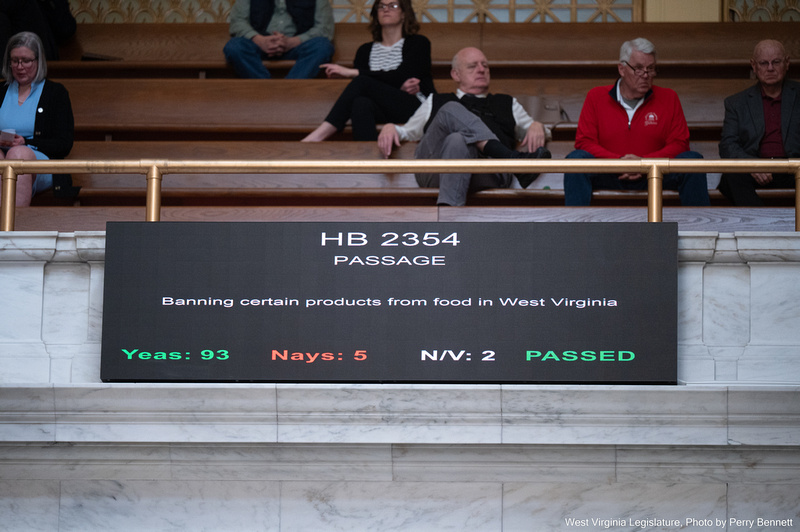
CHARLESTON, W.Va. — A coalition of companies who make soft drinks in the United States are pushing back on claims which have been the catalyst to new laws in West Virginia regarding food ingredients.

The legislature approved a phase out of the use of a large number of artificial dyes used as food additives from being sold in the Mountain State. A lawsuit filed in December blocked implementation of the law for the time being in West Virginia as the litigation plays out. With just over a week to go in the session, due to legal issues, the Legislature has been considering an adjusted ban. The American Beverage Association has been lobbying against those changes. The organization has questioned the claims proposed by advocates of the ban.
First, claims the dyes are unsafe and banned in other countries they say are not true.
“These dyes are certified, each batch, by the U.S. Food and Drug Administration to insure they are what they are actually supposed to be, so that we don’t have contaminants in there that make these ingredients unsafe,” said Dr. Lyle Burgoon, Ph.D., ATS, President & CEO of Raptor Pharm & Tox, Ltd. in a Thursday Zoom call with reporters.
Burgoon said one the criticisms he often hears from advocates of banning the artificial dyes also doesn’t hold up to scrutiny. The claim is the dyes have already been banned in other countries, including those across Europe.
“There USED to be bans in individual European countries, but when they created the European Union the European Parliament actually struck down those laws and replaced them. Where they just widely approved a lot of different certified dyes for specific purposes, just like we do here in the United States,” said Burgoon. “Europe permits more than twice the number of certified dies than we do.”
The beverage industry added the other part of the equation people aren’t told about is the impact it will have on grocery store prices.
“West Virginia has seen some of the highest increases in the nation in the past couple of years. Bans like the one being considered here don’t come without a cost,” said. Ed Patru, Senior Vice President, Public Affairs, American Beverage Association. “They not only burden businesses but they also make groceries more expensive,”
He said a recent study found in state’s like Texas, Louisiana, and West Virginia if the bans would take full effect it would drive up the cost of groceries in West Virginia more than 12 percent.
“That adds about $860 a year to the average West Virginian’s grocery bill,” said Patru.