
West Virginia public health officials acknowledge that families seeking religious exemptions to school vaccination policies do not have to elaborate on their beliefs.
All that families seeking such exemptions have to provide is the name of the student, the school, the parent’s name and the family’s mailing address along with a mention of religious exemptions to confirm that’s what the request is about.
The Department of Health accepts such applications as a self-evident statement of the sincerity of the families seeking the exemptions, according to an affidavit for Justin Davis, interim commissioner of the state Department of Public Health.
“The Department does not require any extrinsic evidence that the belief system is reasonable, logical, comprehensible, or part of a traditional orthodox religion,” Davis said in the affidavit in an ongoing Raleigh County case about vaccine exemptions.
“The Department also does not distinguish between philosophical objections and traditional orthodox religious ones.”
The question of differences between religious, philosophical or conscientious beliefs has been a theme at the center of an ongoing, high profile West Virginia court case.
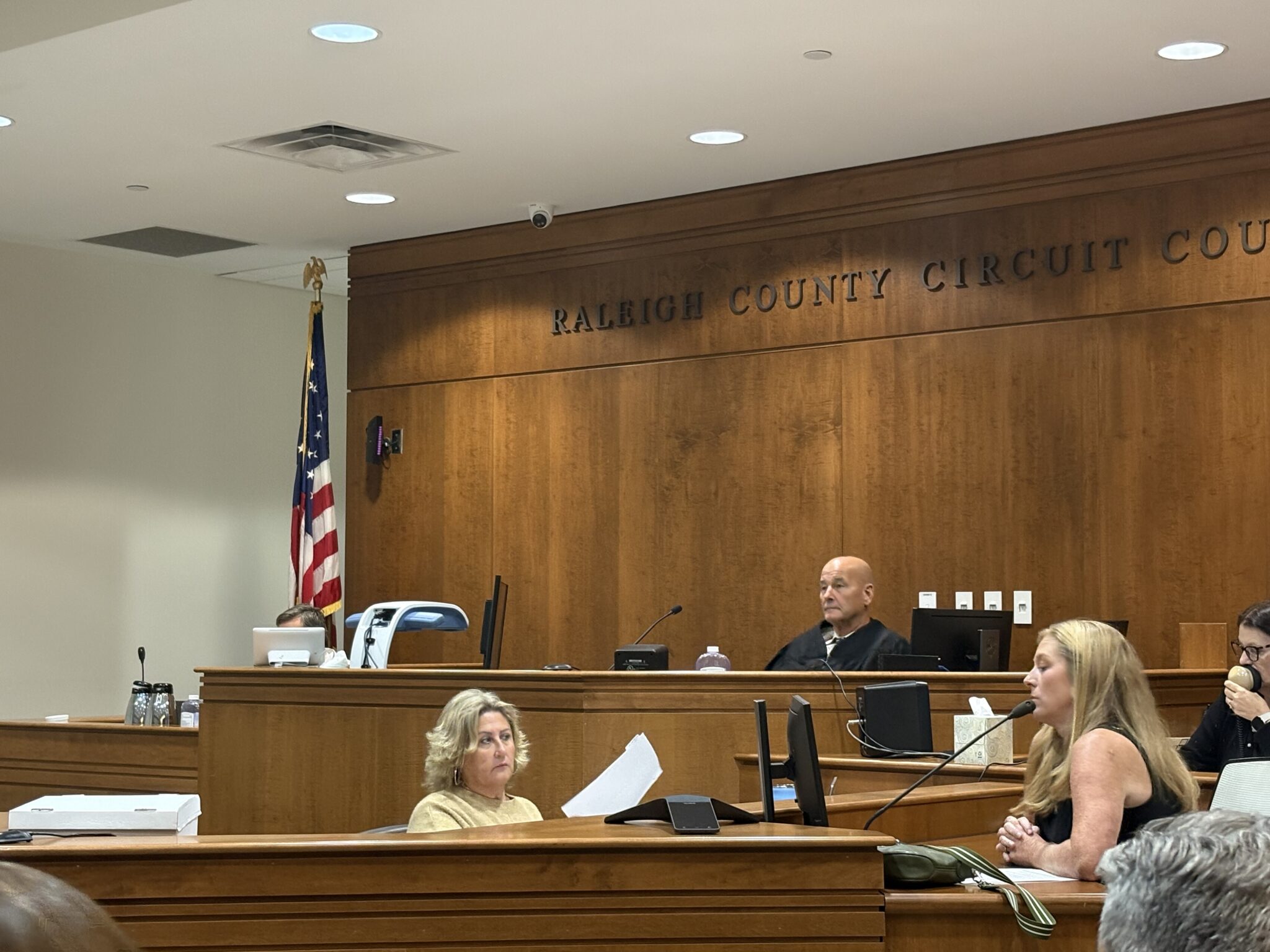
In the Raleigh County courtroom that entered Davis’s affidavit into evidence, Judge Michael Froble concluded that all of the grounds for deeply held belief should be considered the same.
“I believe and want to make a ruling that there is no difference between religious, philosophical and conscientious,” he said.
This is all part of a political and judicial conflict over whether West Virginia’s religious protections law affects the school vaccination requirements in state code.
These conflicts arose after Gov. Patrick Morrisey, who supports religious and philosophical exemptions, directed families seeking exemptions to send a signed letter to VaccineExemption@wv.gov and include name and birth date of the student, name of the parent, name of the school and mailing address of the student.
As Davis testified, the guidance does not ask for a basis of the deeply held belief. Davis said in his affidavit that to his knowledge no requests for religious exemptions have been refused.
Morrisey’s administration and lawyers for families seeking religious exemptions to school vaccination requirements have consistently cited West Virginia’s “Equal Protection for Religion Act,” which went into law in 2023.
The policy lays out the ability of individuals who believe their religious rights have been violated to seek a claim in court. The law says no state action may burden an individual’s exercise of religion unless it’s essential to furthering a compelling governmental interest and is the least restrictive means of achieving that.
West Virginia students entering school for the first time must show proof of immunization against diphtheria, pertussis, tetanus, polio, measles, mumps, rubella, varicella, and hepatitis B unless properly medically exempted.
Members of the state school board maintain the mandatory vaccination law should be interpreted based on its straightforward language. The House of Delegates earlier this year voted down a bill that would have added an explicit religious exemption to the vaccination law.
Froble, the judge in Raleigh County, has ruled that it should be considered a class action to affect the status of more than 570 families who have sought exemptions from the Department of Health for their beliefs.

State Epidemiologist Shannon McBee testified in court last week that state health officials offered alternatives for state’s religious exemptions applications system that could have called for families to elaborate on their beliefs.
But McBee said under questioning by lawyers in the case that a more detailed system did not receive final approval.
“We used the executive order to develop a process so that we could collect minimal demographic information on individuals seeking a religious exemption so that we could adhere to the executive order,” McBee said under questioning by attorney Christopher Smith, a lawyer representing the state school board.
McBee later testified, “When we initially received the executive order, we did do a thorough search, looking at neighboring states and across the country, how other states implement reviewing religious exemption requests to develop internal policies that were submitted to the governor’s office per the executive order.”
An initial proposal included the possibility of outreach to parents about the importance of vaccination and the consequences of children not being vaccinated, McBee testified.
“And we looked at how some states put in place requirements to have, like, their pastor sign off on the religious exemption request, training that is required by parents, different steps that could be put into place from a policy perspective, to ensure that family those with sincere religious beliefs receive an exemption.”
In the end, she testified, “We submitted a proposal, and in turn, the governor issued guidance on how we were going to issue and follow the executive order.”
Holly Wilson, a deputy solicitor general representing the state health department in the court case, later asked McBee followup questions about why families would be taken at their word.
“And that’s because you’re not a theologian, correct? You’re not a chaplain. You also aren’t an expert in lie detection, are you?” Wilson asked.
The state epidemiologist testified that she is none of those.
The court also took testimony from the state’s acting public health officer, Dr. Mark McDaniel, who was hired for that role in August. McDaniel, who was subpoenaed by the judge, took the stand and said he has nothing to do with the state’s religious exemptions process and is not familiar with it.
“So you’re asking me my opinion, if I have an opinion about religious exemptions?” McDaniel said from the witness stand. “I don’t, as my official capacity.”
The acting public health officer later said, “I think it’s part of my job description, but I’m always happy to review anything.”
The lawyers in the case drew from the testimony of the public health officials to spotlight their conclusions.
The attorney for the state school board, Christopher Smith, reminded the judge during closing arguments that the courtroom had “heard from Miss McBee yesterday that if this process is anything, it ain’t rigorous.”
Similarly, Corey Palumbo, the lawyer for the Raleigh County school board, told the judge “You heard from Shannon McBee yesterday what kind of a sham of a process that is with the Bureau of Public Health.”
But Chris Wiest, the lawyer for families seeking to have religious exemptions honored by the school system, said those families should be taken at face value.
” And the reality is, if you think about it,” he said, “no one’s going to request an exemption if it didn’t burden their beliefs.”