
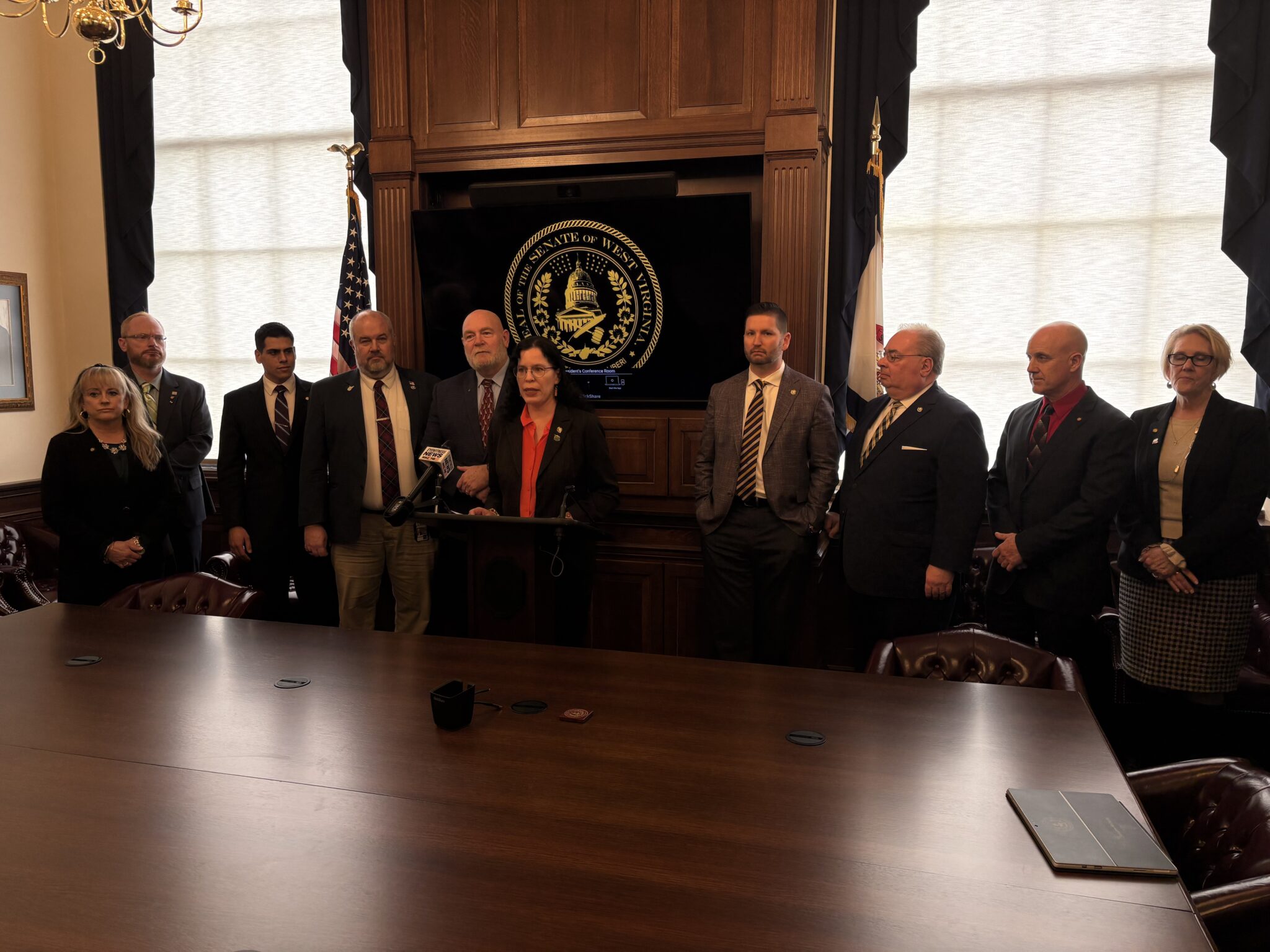
Flanked by likeminded delegates and senators, the chairwoman of the Senate’s school choice committee said a proposal to reign in the Hope Scholarship for students outside the public school system goes too far.

“This is a way to stop innovation and individualized educational opportunities, which many Hope families are specifically looking for,” said Senator Patricia Rucker, R-Jefferson.
“These changes would drastically change the benefits of the Hope Scholarship and dramatically decrease the parent’s ability to make decisions that best fit their child’s needs.”
Rucker read aloud from messages sent by families describing the benefits of the Hope Scholarship.
The House Finance Committee this week rolled out legislation aimed at refining the Hope Scholarship, which provides financial support for families seeking educational options outside the public school system.
While the scholarship is currently an amount that changes annually, this bill would establish a fixed annual amount for an individual recipient of $5,250.
The bill also would refine allowable expenses to categories of tuition, curriculum and technology. Several previously allowable categories would now be out: testing and prep fees, after-school or summer education programs and music equipment — plus a “catch-all” provision that allowed the Board to approve “any other qualifying expenses.”
The bill bumps up the requirements for student assessments to maintain eligibility. And the definition of a “participating school” is strictly limited to private schools and microschools located in West Virginia.
“Some of the changes that greatly concern me are limiting the amount of Hope, thereby not allowing it to grow or shrink based on the annual expenditures of the Legislature, requiring schools to be inside the state yet allowing virtual to be throughout the country — and the lack of clarity on this prohibition,” Rucker said.
“We don’t know if vendors outside the state will be available for students.”
She objected to “eliminating many qualifying purchases like tutoring, summer educational programs, instruments and any part of enrichment activities” as well as “mandating Hope students must participate in the same tests as public school students, tests that are geared for public schools, that may not fit what and how the Hope student is learning.”
The House Finance committee will revisit the bill as soon as Friday, potentially making changes and passing it to the full House of Delegates.

“It does restrict the number of dollars that are committed to the individual student in the program. But as I’ve said, at this particular point in time, the dollars appear to be adequate for what we’re doing,” said Delegate Marty Gearheart, R-Mercer, a member of the finance committee on MetroNews Talkline.
“It changes the formula so that dollar amount is not continually escalating on an obscure metric. It does leave it to legislature to determine whether that amount is correct or does need to be raised.”
Passed by the Legislature in 2021, the Hope Scholarship Act initially made the program available only to West Virginia children who were either entering kindergarten for the first time or leaving public schools for some other educational option.
However, the Act expands eligibility for the program beginning in the 2026-2027 school year to all school-age children residing in West Virginia, even if they’ve been receiving their education outside the public schools for years.
Ahead of the first year of full implementation to all families who want to use the money, the Hope Scholarship has anticipated cost of $230 million and an increased base of $127.3 million in the coming fiscal year.
Treasurer Larry Pack, whose office administers the Hope Scholarship, expressed disappointment over the proposed changes. He emphasized that the proposed changes are occurring less than two weeks out from universal expansion and called the proposed changes drastic.
“It changed so much of the program, really, a tremendous amount of different changes. We’re really in the process where people are already signed up for the program for next school year,” Pack said on Talkline.
“We’ve had over 8,000 people who are already signed up. We’ve got more folks signing up every day, and we’re two weeks away from the universal eligibility group to come in.”