
MORGANTOWN, W.Va. — Mountain State-based alternative energy contractors continue to encourage residents statewide to take advantage of a tax credit that is set to expire in just a few days.

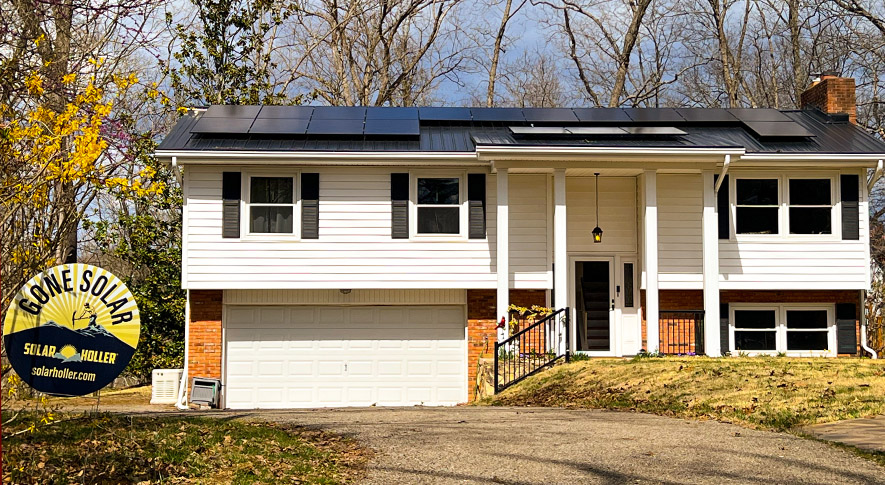
Solar Holler Founder and CEO Dan Conant said solar may be an option for Mountain State residents who may be looking to use solar power as an energy source for their property ahead of the expiration of the 30 percent federal clean energy tax credit Dec. 31. The recommendation was made as his company continues the installation of dozens of 5-kilowatt solar panel systems designed for residential use, along with larger systems for properties that host nonprofit organizations and commercial businesses ahead of the deadline.
“If folks want to take advantage of that tax credit that covers 30 percent of the costs of the project, it has to be installed this year,” Conant said recently on WAJR’s “Talk of the Town.” “And then next year, it goes away.”
According to Conant, the cost for an installation varies depending on the size of the property, with most 5 kW solar panel systems expected to cost just over $10,000 to fully integrate into an average four-bedroom household. Once everything is installed, homeowners can then incorporate up to 30 percent of the total installation costs of the system towards their federal tax payment. This will also be separate from a new process that residents can take part in where usage of the solar panels can be incorporated into monthly energy bills.
“We actually tie it into the power grid, so when you’re not home and it’s a sunny day, the solar will spin your meter backward,” said Conant. “And then you’ll build up credits that you can apply against your bill.”
Conant said not only is there expected to be a direct cost benefit for individual consumers but also investment in solar panel-based energy sources that directly affects the West Virginia economy.
According to Conant, a wide variety of solar panel pieces of equipment are produced and sold in various parts of the Mountain State. Added with the use of contractors with the International Brotherhood of Electrical Workers, Solar Holler hopes the immediate investment into an industry that has over 700 people employed across West Virginia will also entice new users alongside the tax credit and energy bill benefits that can be negotiated with service providers.
“A lot of panels from around the country are actually being made out of West Virginia sand, and we’ve got batteries being made up in Weirton, and steel and all kinds of stuff so the solar industry as a whole is construction but also manufacturing.”
The expiration of the federal tax credit is expected to be fully applied at the start of 2026, with the credits for nonprofits, farmers, and commercial businesses allowed to be safe harbored until 2029. The credit for safe harbored projects can only be applied if the solar panel installation is locked in place by the end of this year. With projects taking place in homes all the way to religious centers from as far south as Flatwoods and as far north as Monongalia County, Conant encourages West Virginians to give solar power a shot.
“Depending on what you’re looking for, it can either just be a price hedge to make sure you’re protected from the utility increases, or it can also be a security for power to run,” said Conant. “For power to run the freezer and fridges and everything you need.”
Solar Holler currently employs 105 people.