
Eduardo Tinajero Rodriguez was one of the many people swept up along West Virginia highways in recent weeks. He was detained after a traffic stop based on an illegible license plate on a trailer and after an officer called immigration agents because of his inability to speak English.

In reviewing his situation, U.S. District Judge Irene Berger said there has been no evidence that Rodriguez has a history of violence or serious criminal convictions, that he poses a risk of not cooperating with the immigration system, that he is a danger to the community or that he has ever been involved in gang activity.
Then the judge’s assessment took a twist. Berger noted that federal authorities had attached documentation of a 2009 conviction for marijuana possession.
That did not add up, the judge wrote. “The Petitioner,” she wrote, meaning Rodriguez, “was four years old in 2009.”
The most likely cause of the error, Berger concluded, was that the document supplied by U.S. Immigrations and Customs Enforcement referred to a different person who was convicted but who had the same name. This mistake occurred “despite the differences in birthdate, birthplace, parents’ names, and immigration status.”
The judge’s footnote concluded, “This sloppiness further validates the Court’s concerns about the procedures utilized by the Respondents depriving people present in the United States of their liberty.”
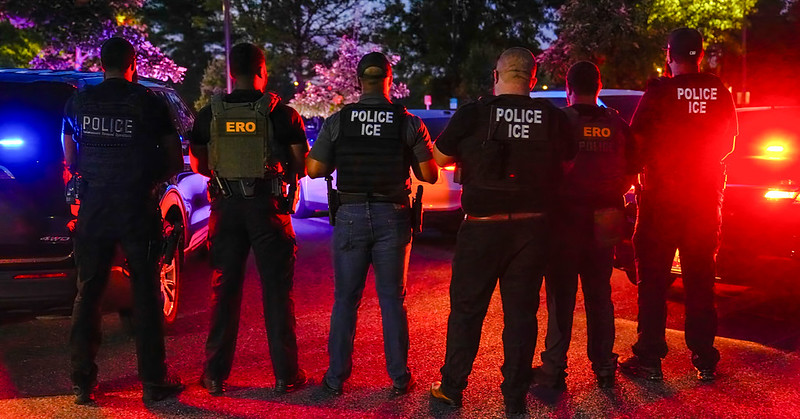
The arrest was one of 650 from January called “Operation Country Roads, where ICE said agents “had arrested a convicted child sex abuser, a criminal convicted of drug possession charges, and many others during the operation.”
The federal agency said, “Together, federal, state and local law enforcement officials identified and arrested hundreds of illegal aliens who present dangers to national security and risks to public safety, as well as those who entered the United States illegally or have otherwise undermined the integrity of U.S. immigration laws and border control efforts.”
The aftershock has resulted in a wave of cases in recent weeks before judges in U.S. District Court for the Southern District of West Virginia with people seized in immigration sweeps contesting the basis of their arrests and subsequent incarceration.
These cases have typically involved people who first entered the United States unlawfully and then wound up at processing centers, where they were released under conditions that their immigration status would be reviewed. Many of the people in these cases have declared asylum because of upheaval in their home countries.
Lawyers for the people in these cases contend that they have cooperated with the immigration system and that judges in that system should make final determinations of status.
Instead, they have been caught up in West Virginia highway sweeps, arrested and sent to jail without being charged with a criminal offense. So their lawyers have been contesting the grounds of their recent West Virginia arrests and incarcerations.
The judges have consistently concluded that the people, often detained after minor traffic stops, lacked histories of violence and were frequently held without warrants or proper hearings. In case after case, the judges have ordered the people set free from West Virginia jails.
Last week, Berger had three such cases. This week, there is another one before Judge Thomas Johnston.
The judges, including Berger, have sometimes called out sloppiness by federal authorities in their orders.
Beyond the Eduardo Tinajero Rodriguez case, Berger called out several other instances of procedural inaccuracies, evidentiary failures and a lack of professional standards.
An earlier case before Judge Berger involved Rasul Umarov, a citizen of Russia, who entered the United States at a port of entry in 2022. He filed a timely asylum application in 2023, based on persecution in the Russian Federation, according to the court record.
Umarov gained legal employment authorization and maintains gainful employment. He is married and has a 10-month-old daughter, who is a United States citizen. He has no criminal record and is accused of no criminal conduct, the judge wrote.
He was arrested on Jan. 16 by officers conducting a commercial traffic stop on I-77 near the Ghent Toll Plaza. Umarov was arrested and taken to South Central Regional Jail.
The judge outlined that U.S. attorneys took the position that they had no knowledge of the man’s history, arrest, or status beyond boilerplate documents supplied by ICE.
“The United States refused to provide any factual information regarding the ‘procedures’ used to detain Mr. Umarov beyond the form produced by ICE following his arrest,” Berger wrote.
“The risk of an erroneous deprivation of liberty when agents are given the power to indefinitely detain people with only the information garnered during a traffic stop on the side of the interstate is enormous, and enormously troubling.”

A case before U.S. District Judge Robert C. Chambers focused on Nurdin Shailookul Uulu, a native of Kyrgyzstan, who had presented at a port of entry in 2023 and was released into the United States. He has an individual hearing before an immigration court in California on April 7, 2027.
He had been living in California, paid taxes, kept in compliance with immigration court requirements and had work authorization as a commercial truck driver, according to the court record.
Uulu was stopped for an “expired fuel tax” at a weigh station in Hurricane, Putnam County, on Jan. 16 and arrested for “being illegally present in the U.S.”
Chambers, in ordering Uulu to be released from jail in West Virginia, also said sloppiness in the case was troubling. A lack of attention to detail is likely to indicate bigger and broader problems, the judge wrote in a footnote.
Specifically, the judge pointed toward U.S. Homeland Security written descriptions of Uulu’s traffic stop and arrest, which said “the subjects were placed under arrest” when there is only one subject, Uulu.
Beyond the pronoun agreement error, the judge observed, the document references two unrelated individuals as the petitioners
“The high volume of individuals being arrested, detained, and petitioning for release is clearly leading to mistakes which is frustrating given the gravity and nature of the fundamental liberty interest that is at stake,” Chambers wrote.