

WELCH, W.Va. — Sunday marks the one-year anniversary of floods in southern West Virginia which reached record levels in some places and left three people dead.
The Tug Fork River rose rapidly on Feb. 15, 2025 and towns along the waterway from its headwaters near Welch all the way to Louisa, Kentucky felt the impact of the flood.
A federal disaster declaration was signed by President Donald Trump.
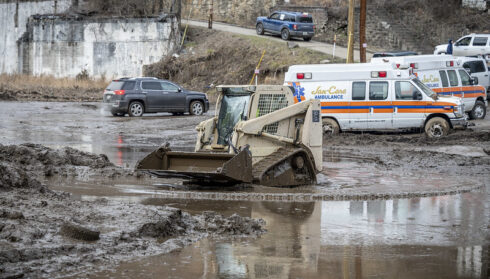
“I’ve never seen this much water. I was born in 1963 and I think this was just as bad as the 1977 flood,” Gary Barber, Town Recorder in the town of Gary told MetroNews inside a flood damaged city hall building.
In the town of Welch three people died when their vehicle was swept away in the flood waters, including a child.
“It happened right below my house. I heard the people screaming,” said McDowell County Commissioner Michael Brooks at the time. “Welch Fire Department guys were in the river trying to help. There were grown men in tears saying , ‘I tried.'”
Listen to “Montage of MetroNews Flood Coverage in Feb. 2025” on Spreaker.
During the first 48 hours of the flood, the Division of Natural Resources law enforcement along with local volunteer fire departments conducted more than 30 rescues along the Tug Fork. More than 50,000 people lost power in the incident and it was off for days.
“It just would not quit raining. It was a train coming right at us.” said former lawmaker and McDowell County School Board member Ed Evans.
Evans said it started at about 6:30 a.m. Saturday, Feb. 15, 2025, and woke he and his wife up. By Saturday night the Tug Fork River, Elkhorn Creek and several streams were flooding. It had rained more than four inches.
“I hope I never see anything like this again,” Evans, who has now lived through three major floods and two minor ones in McDowell County, said.
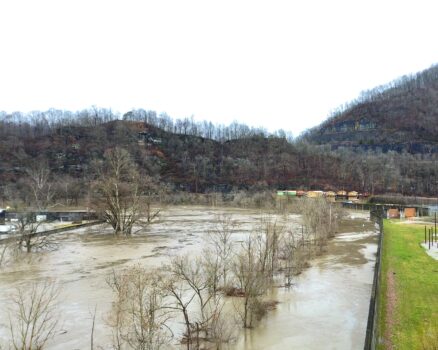
Downstream the flood wall at Williamson was closed and save the town from certain destruction.
“If it had been for the flood wall parts of the town would have had six or eight feet of water in them,” Williamson Mayor Mike Casey said at the time. Further downstream the town’s of Kermit and Naugatuck also incurred damage, but not nearly to the level of Welch.
The National Guard was immediately mobilized and spent months helping residents living along the Tug Fork watershed cleanup debris and throw out belongings ruined by the high water.
Today, the flooded areas of McDowell and Mingo counties are better than they were a year ago, but officials say they still need help and will probably never be fully recovered from the disaster. Many said it was the worst flooding in that region in their lifetime.