
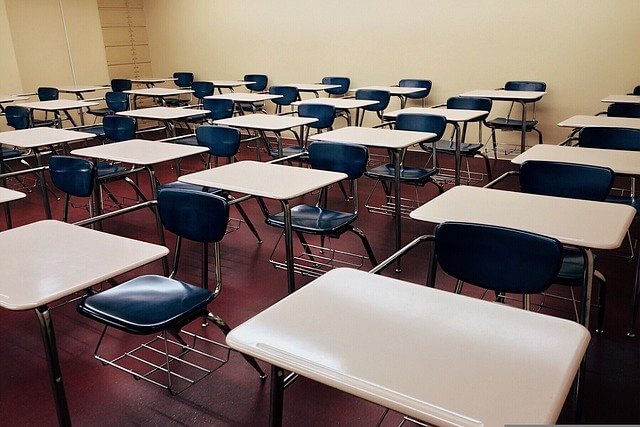
The House of Delegates passed legislation that will change funding for local school systems, although it wouldn’t kick in until three years from now.
The bill passed on a 89-2 vote and now goes to the state Senate.
Financial support for West Virginia’s public schools has been a recurring theme of this year’s legislative session, although additional dollars are not coming right away.

“I would love to give it to them this year, but we don’t have it in the budget right now,” Delegate Joe Ellington, R-Mercer, said during House discussion today.
Gov. Patrick Morrisey has made a priority of passing a 5% personal income tax cut, although the governor aspires to 10 percent. And as Hope Scholarship funding has opened for all students outside the public school system, that’s now a roughly $230 million expense.
In December, the state school board approved consolidations and closures of more than a dozen schools across six counties. The state board recently agreed to two more closures in Wayne County. The state also experienced a wave of school consolidations last year.

“If your house is on fire, you don’t call the fire department and say take your time, show up in a couple of days, couple of months, three years. This is urgent. It needs our attention right now,” said Delegate Mike Pushkin, D-Kanawha.
“How many schools are going to close in each of our districts during the next three years?”
HB 5453 is a significant revision of the current public school funding formula to make it simpler, more transparent and more aligned with student needs — especially special education — while moving away from the current step‑based, multi‑schedule formula.
Under the most recent version of the bill, the current school funding aid formula would be used for the coming three academic years, until 2029.
Starting with 2029-2030, all county school boards would be funded by block grants of $6,100 per enrolled student. County boards that have fewer than 1,200 enrolled pupils per county would be funded at the minimum level of 1,200 students.
Funding for public charter schools, starting in 2029 and after that, would be $8,600 per student. The minimum student population level wouldn’t apply.
The bill establishes three tiers for additional funding for special needs students. And there are more categories of supplemental funding for areas like transportation, vocational and technical education centers, alternative learning centers and pilot programs.
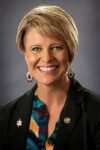
Providing more financial support for public schools has been a priority for Senate Education Chairwoman Amy Nichole Grady, R-Mason. The committee she leads explored three potential options earlier this year, but none advanced any farther.
“Speaking of frustrations, none of the school funding bills we passed in the Senate Education are going to make it to the budget so I’m perfectly fine adjourning sine die,” Grady said in a hallway interview earlier this week, both laughing and grimacing.